Paying the Pink Tax at the Rack: How Bold Color Gets Marked Up and What to Do About It
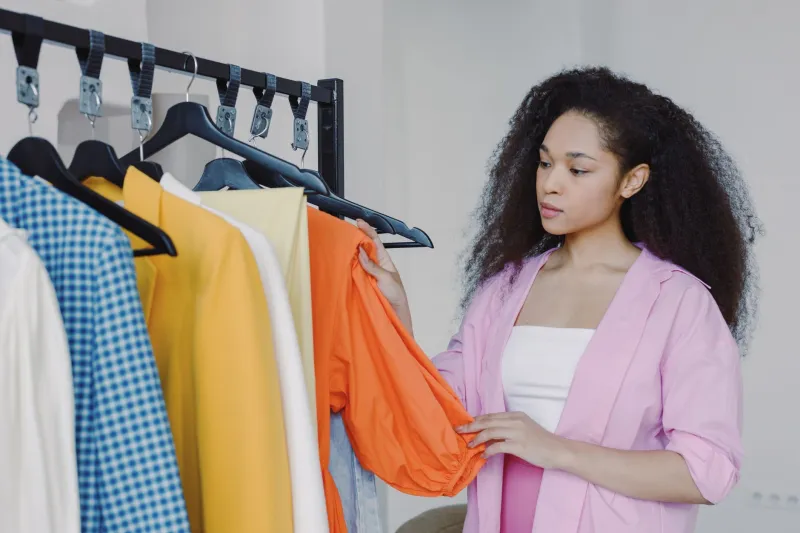
Let's set the scene. You're scrolling through a retailer's website, and you spot a structured midi skirt in the most perfect shade of tangerine. You click. You gasp — not at the color, but at the price. Then, out of curiosity, you filter the same style in ivory. It's $38 cheaper. Same fabric. Same silhouette. Different story entirely.
Welcome to what a lot of color-forward shoppers quietly call the boldness tax — the invisible premium tacked onto vibrant, trend-driven pieces in women's fashion. It's real, it's frustrating, and it disproportionately affects women who refuse to live in a beige wardrobe. But once you understand how it works, you can start shopping around it.
Why Colorful Pieces Cost More (The Industry's Side of the Story)
To be fair, some of the price gap has a legitimate explanation. Dyeing fabric in deep, saturated hues — think emerald, fuchsia, cobalt — actually costs more than producing neutrals. Achieving color consistency across a large production run is technically demanding. Rich pigments require more dye, more processing steps, and sometimes specialty finishing treatments to prevent fading or bleeding. Brands will tell you this, and they're not entirely wrong.
Limited colorways add another layer. When a brand produces a style in twelve neutral shades and two bold ones, the bold options often have smaller production runs. Smaller runs mean higher per-unit costs, and those costs get passed to you.
Then there's trend positioning. Brands know that a woman hunting for a specific shade of hot coral is probably shopping with more intention — and more willingness to pay — than someone grabbing a basic white tee. Vibrant pieces get merchandised as statement items, and statement items carry statement prices. It's a psychological markup dressed up as a creative one.
When the Markup Is Just Marketing
Here's where it gets less defensible. A lot of the premium on colorful pieces has nothing to do with production costs and everything to do with perceived value. Brands have spent decades conditioning shoppers to treat bold color as aspirational — as something you treat yourself to, not something you simply buy. That framing is incredibly convenient for their margins.
Fast fashion brands do this too, just at a lower price tier. The neon green version of a going-out top will almost always be priced above the black one, even when the actual cost difference at the manufacturing level is negligible. The color becomes the product. The product becomes the experience. And the experience gets priced accordingly.
There's also the resale factor. Neutral pieces are considered more "versatile" by both brands and resale platforms, which means colorful items are often flagged as higher-risk inventory. Some brands compensate for that risk by marking up the initial retail price. Others use it to justify not discounting bold colors during sales — which, if you've ever noticed that the cobalt option is always suspiciously excluded from the 30%-off promo, you already know this firsthand.
The Real Cost of Playing It Safe
What's wild is that the boldness tax creates a financial incentive to dress boringly. If you're shopping on a budget and the red dress costs more than the grey one, the economically rational choice is the grey one. Multiply that across an entire wardrobe, and you've got a closet full of "safe" choices that never actually felt like you. That's not just a style loss — it's a subtle form of self-erasure that gets baked into the economics of getting dressed.
For women of color, plus-size shoppers, and anyone who already faces limited representation in mainstream fashion, the boldness tax stings a little harder. Bold color has historically been one of the most powerful tools for visibility and self-expression. Pricing it out of reach — even slightly — is a quiet message that vibrancy is a luxury, not a right.
How to Shop Bold Without Getting Played
Okay, enough economics. Here's the part where we actually help you win.
Buy bold in basics. The easiest way to get colorful pieces at fair prices is to apply them to wardrobe staples — T-shirts, tanks, straight-leg trousers, simple knit dresses. These styles have more competition in the market, which keeps prices honest. A cobalt crew-neck from a mid-range brand is going to be priced more fairly than a cobalt statement blazer from the same brand, even if the blazer is technically more wearable long-term.
Learn the sale cycle for color. Bold pieces tend to get discounted later in a season than neutrals, because brands are betting on impulse buys at full price. But by mid-season — think late October for fall colors, late March for spring brights — those items start moving to clearance. Set alerts, check back, be patient. The tangerine skirt will eventually go on sale.
Shop secondhand with intention. Resale platforms like ThredUp, Poshmark, and Depop are genuinely great for colorful pieces because bold items photograph well and get listed frequently. The resale market tends to undervalue color (buyers are conditioned to want neutral "classics"), which means you can often find vibrant, barely-worn pieces at a steep discount. Search by color on these platforms — it's a feature most people underuse.
Know which brands do color well at every price point. Some retailers have genuinely committed to offering bold options at fair prices — not as a trend play, but as part of their core identity. Do your research. Read reviews specifically about color accuracy and fabric quality in non-neutral shades. A brand that does color well tends to do it consistently, and that's worth your loyalty.
Invest up in pieces where color complexity actually matters. If you're going to spend more, spend it on structured outerwear, quality knitwear, or leather goods in bold shades. These are the categories where the dye quality, finishing, and construction genuinely affect longevity. A $180 cherry-red wool coat that lasts eight years is a smarter spend than a $60 version that pills and fades by February.
Avoid the "limited edition" color trap. Brands love to drop a bold color as a "limited edition" drop to create urgency and justify a higher price point. Sometimes those pieces are genuinely special. Often they're not. Ask yourself whether you'd pay the same price for the neutral version before you let the color excitement override your budget sense.
Dress in Color Because You Want To — Not Because You Could Afford To
The boldness tax is real, but it's not unbeatable. Understanding why vibrant pieces get marked up is the first step toward shopping smarter — and refusing to let the economics of fashion dictate how visible you're allowed to be.
Wearing color isn't a luxury. It's a choice. And with the right approach, it's one that fits every budget, every body, and every woman who's done apologizing for taking up space in a room.
Shop bold. Shop smart. Don't let anyone charge you extra for being exactly who you are.