Beige Is Boring Now: Why Young American Women Are Going All In on Color
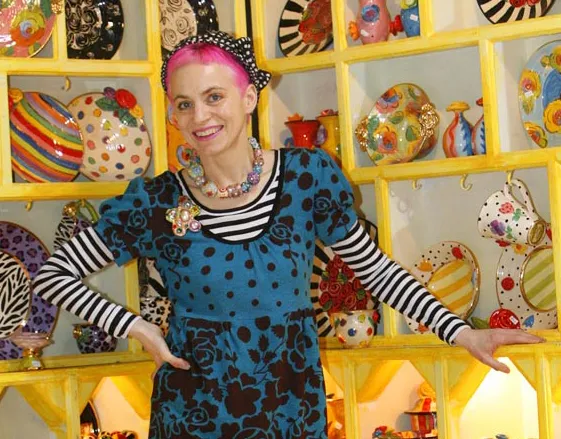
Photo: Mary Rose Young, Attribution, via Wikimedia Commons
Somewhere around 2017, a very specific aesthetic took over. Everything was white linen. Minimalist capsule wardrobes. The "clean girl" with her slicked-back bun, her $400 cream-colored ribbed tank, and her complete absence of pattern. Fashion influencers called it effortless. Brands called it timeless. The rest of us quietly wondered if we were supposed to look like we were perpetually on the way to a yoga retreat in Montauk.
That era is ending. And honestly? Good riddance.
The Rise and Exhaustion of Normcore
Normcore — the deliberate embrace of unremarkable, neutral, blending-in fashion — had its cultural moment for understandable reasons. After years of fast fashion maximalism and logo overload, the appeal of a paired-down wardrobe made sense. There was a certain relief in the idea that less was more, that restraint was sophistication, that a beige trench coat and white sneakers could carry you through any situation.
But here's what nobody said out loud: neutral everything is also safe everything. And safe, when it becomes the only option celebrated in mainstream fashion spaces, starts to feel like a quiet instruction to make yourself smaller. To not take up too much visual space. To not be too much.
Gen Z, in particular, has a well-documented allergy to being told what to do — especially when that instruction comes wrapped in the language of "timelessness" and "elegance." So naturally, they blew the whole thing up.
Enter Colorcore: The Aesthetic That Refuses to Apologize
Colorcore is exactly what it sounds like: an unapologetic commitment to saturated, expressive, maximalist color. It's cobalt and chartreuse in the same outfit. It's a fuchsia coat over a floral printed dress with mismatched earrings. It's the visual equivalent of turning the volume all the way up and leaving it there.
On TikTok and Instagram, the hashtag #colorcore and related tags like #dopaminedressing and #maximalistfashion have collectively racked up hundreds of millions of views. The algorithm is full of women layering unexpected color combinations, mixing prints, and doing it with an ease that makes the whole thing look less like a fashion statement and more like a personal philosophy.
And that's exactly what it is.
Social Media Didn't Create This Shift — It Amplified It
It would be easy (and a little lazy) to credit TikTok with inventing the color revival. But what social media actually did was give visibility to a desire that was already brewing. Younger women — particularly Millennial women who came of age in the era of Tumblr's moody, washed-out aesthetic and Gen Z women who watched their entire adolescence get flattened into a beige-and-white mood board — were already hungry for something different.
Platforms like TikTok democratized fashion influence in a way that traditional media never did. You didn't need a stylist or a magazine spread to validate your outfit choices. You just needed a phone and a point of view. And when real women started posting their bold, colorful looks and getting hundreds of thousands of affirmations from strangers who felt the same way, the permission structure around dressing changed.
Suddenly, the fearless choice wasn't risky — it was relatable.
The Sustainability Angle Nobody's Talking About Enough
Here's a less obvious thread in the colorcore story: sustainability. Stay with me.
One of the dominant arguments for building a neutral wardrobe was that it was more "sustainable" — neutrals are easier to mix and match, they don't feel dated as quickly, they're versatile. And while that logic isn't entirely wrong, it also became a convenient cover for buying a lot of the same boring things.
The colorcore movement, interestingly, has pushed a different kind of sustainable thinking: buy less, but buy bolder. A truly spectacular electric blue coat that you love deeply and wear for ten years is more sustainable than five slightly different greige jackets you cycle through because none of them feel special enough to commit to.
Younger consumers are also increasingly drawn to vintage and secondhand shopping — and the thrift store is where color lives. Those racks are full of the bold, expressive pieces that previous generations donated because they felt like "too much." Gen Z walked in and called them treasure.
Real Styling, Real Women
Colorcore isn't a look that belongs exclusively to a specific body type, skin tone, or budget. That's part of what makes it genuinely exciting as a cultural moment.
A woman in Chicago layers a tangerine blazer over a magenta slip dress for date night and calls it her "main character" look. A graphic designer in Atlanta builds her entire work wardrobe around jewel tones — emerald, sapphire, plum — because she says neutral palettes make her feel invisible in creative meetings. A college student in Los Angeles thrifts a cherry red vintage coat and wears it over everything from jeans to floral midi skirts because, as she told her 80,000 TikTok followers, "I decided I'm done dressing for other people's comfort."
These aren't outliers. They're the new mainstream.
Why 'Playing It Safe' No Longer Reads as Smart
For a long time, the neutral wardrobe was coded as the intelligent choice — practical, professional, sophisticated. Wearing color, particularly bold color, was subtly framed as naive, try-hard, or lacking in taste.
That coding is shifting. In a cultural moment where authenticity is the most valued currency — where audiences can smell a performative personal brand from a mile away — the woman who shows up in a carefully curated monochrome beige ensemble can actually read as less genuine than the one who walks in wearing something that clearly thrills her.
Boldness, it turns out, is a form of honesty.
Fashion psychologist Dr. Carolyn Mair and other researchers in the field of enclothed cognition have noted that what we wear affects not just how others see us but how we feel and perform. When your outfit reflects your actual personality — when it's genuinely expressive rather than defensively neutral — you tend to feel more grounded, more energized, and more present.
In other words, dressing boldly isn't just aesthetically brave. It's psychologically smart.
The Pinkia Arora Take
We've always believed that color is a form of courage. Not the performative kind — the real, daily kind that says I know who I am, and I'm not going to hide it under a layer of greige.
The shift from normcore to colorcore isn't a trend that will peak and disappear. It's a reflection of something deeper: younger American women claiming the right to be fully, visibly themselves. To dress for joy instead of camouflage. To walk into a room and take up exactly as much space as they deserve.
The beige era had its moment. This one belongs to the bold.