Can Wearing Bright Colors Actually Make You Happier? We Asked the Experts

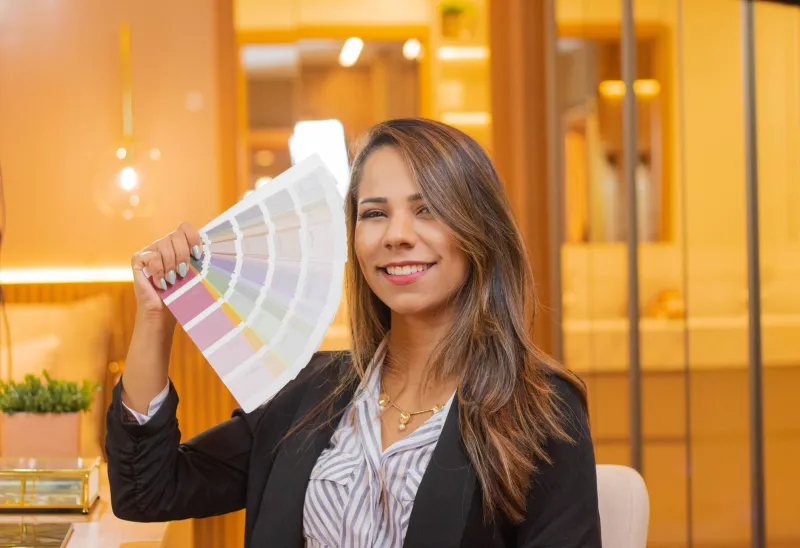
Photo: Sri Wahyuni Nur Indah Sari, CC BY-SA 3.0, via Wikimedia Commons
The Trend That Won't Quit
Scroll through TikTok for five minutes and you'll see it: someone in a fire-engine red trench coat crediting their outfit for their good mood, a fashion creator in electric yellow declaring she cured her anxiety with color, a wellness influencer swearing that swapping her gray wardrobe for jewel tones changed her entire mental landscape. Dopamine dressing — the idea that wearing bold, saturated hues triggers a neurochemical happiness response — has become one of the most talked-about concepts in fashion and wellness simultaneously.
But here at Pinkia Arora, we believe in bold color and bold honesty. So we did what the algorithm rarely does: we slowed down and asked some hard questions. Does wearing bright color actually boost your mental health, or are we collectively buying into a very stylish piece of pseudoscience?
The answer, it turns out, is somewhere beautifully complicated in between.
What the Science Actually Says
Let's start with the term itself. "Dopamine dressing" was popularized by fashion psychologist Dr. Dawnn Karen, who coined it around 2012, though it exploded into mainstream consciousness during the pandemic as people desperately sought joy in small, controllable ways. The premise borrows from color psychology — a legitimate field of study — but the leap from "color affects perception" to "color triggers dopamine" is where things get murky.
"Dopamine is a neurotransmitter associated with reward and motivation, but it's not directly triggered by visual stimuli in the simple, linear way the trend implies," explains the science. What researchers have found is more nuanced: color can influence mood through association, attention, and arousal — not necessarily through a direct neurochemical spike.
Studies in environmental psychology have shown that exposure to certain colors can affect heart rate, alertness, and even perceived temperature. Red, for instance, has been consistently linked to heightened physiological arousal. Yellow tends to capture attention and has associations with warmth and optimism in many Western cultural contexts. Blue is frequently connected to calm and focus. These aren't myths — they're documented patterns. But they're also deeply contextual.
"Color response is never universal," says the field of color psychology broadly. "What feels energizing in one cultural context can feel alarming in another. What feels joyful to one individual based on their personal history can feel overwhelming to someone else."
The Personal History Problem
This is the part dopamine dressing content almost never mentions: your emotional response to color is heavily shaped by your biography.
If you grew up in a household where your mother wore bright fuchsia and she was your safe person, chances are fuchsia will carry a warmth for you that has nothing to do with neuroscience and everything to do with memory. Conversely, if you associate a particular shade of orange with a difficult period in your life, no amount of trend content is going to make that color feel good on your body.
Fashion therapists — yes, that's a real and growing profession — work with clients specifically on this intersection of clothing and psychological history. The core insight from that field is that getting dressed is a deeply personal act of self-expression, and the power of color comes less from the color itself and more from the meaning you assign to it and the agency you feel in choosing it.
That agency piece is significant. Research in behavioral psychology suggests that the act of making an intentional, expressive choice — about anything, including your outfit — can contribute to a sense of autonomy and self-efficacy. And those feelings genuinely do support mental wellbeing. So in a roundabout way, choosing a bold color on purpose, because you decided it reflects something true about you today, might actually contribute to a better mood. Just not because of dopamine.
Cultural Conditioning Complicates Everything
Here's another layer: color psychology findings are not culturally neutral, and a lot of the research that gets cited in trend content was conducted on Western, often American or European, subjects.
In the US, white is associated with weddings and new beginnings. In many East Asian cultures, white is the color of mourning. Black is Western fashion's ultimate power color; in other contexts it reads entirely differently. When we talk about "bold colors making you feel good," we're often unconsciously defaulting to a very specific cultural framework.
For women of color in America especially, the relationship with color in clothing carries additional layers. There's a long history of Black women and women from South Asian, Latina, and Indigenous communities being told that their natural affinity for vibrant color — deeply embedded in their cultural aesthetics — was "too much" or "unprofessional" by white-dominated style institutions. The dopamine dressing trend, in some ways, is mainstream fashion finally catching up to what these communities have always known. But it's worth naming that history rather than erasing it under a wellness-trend umbrella.
So Should You Actually Try It?
Here's our honest take: yes, with intention.
The science doesn't support the idea that throwing on a neon green top will chemically rewire your brain chemistry. But the broader evidence does suggest that dressing expressively, making deliberate choices about how you present yourself to the world, and wearing colors that hold personal meaning or simply make you feel seen — all of that has genuine psychological value.
The trap is treating dopamine dressing as a prescription rather than an invitation. If someone tells you that wearing bright colors will fix your anxiety or lift your depression, that's an overclaim that flattens what are often complex mental health realities. Color is not therapy. A bold dress is not a diagnosis.
But as one tool among many? As a daily practice of choosing yourself, expressing your inner world through your outer presentation, and giving yourself permission to take up space in vivid, unapologetic color? That's real. That matters.
At Pinkia Arora, we've always believed that bold color is less about following a trend and more about making a statement to yourself first. Not because a TikTok told you it would make you happy — but because you decided it would.
And honestly? That distinction is everything.
The Bottom Line
Dopamine dressing is partly science, partly culture, and partly a very good story we tell ourselves when we want permission to wear the thing we already wanted to wear. The neuroscience is more complicated than the trend admits. The psychology, though, is real — just not in the way the algorithm frames it.
Wear the color because it feels true to you. Wear it because it's yours. That's where the actual power lives.