Dressing Against the Dark: How Bold Color Becomes an Act of Defiance When You're Struggling

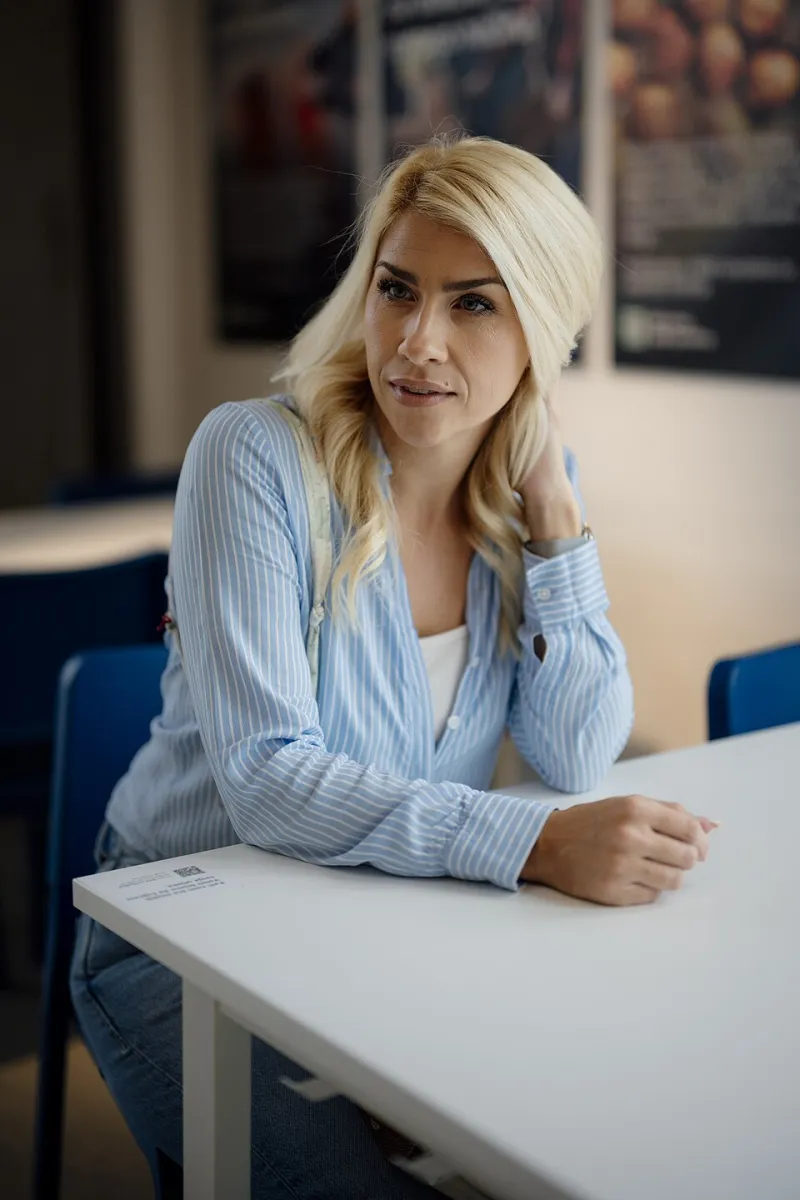
Photo by Photo by ErnAn Solozábal on Unsplash on Unsplash
There's a moment a lot of women know too well. You're standing in front of your closet on a day when everything feels heavy, and the easiest thing — the only thing that makes sense — is to reach for the gray hoodie. The soft, shapeless one that asks nothing of you and gives nothing back.
And honestly? Sometimes that's exactly right. Rest is real. Comfort matters.
But here's the thing nobody talks about enough: sometimes, on those same kinds of days, pulling on something vivid — a saturated emerald green, a warm terracotta, a lipstick-red midi skirt — isn't denial. It isn't pretending. It's a small, deliberate act of not letting the darkness have the final word.
This is the confidence paradox at the center of how so many women quietly navigate mental health struggles through what they wear.
It's Not About Faking Happy
Let's get something out of the way immediately. Wearing a bold color when you're depressed is not the same as slapping a smile on and telling yourself to "just think positive." That kind of forced cheerfulness can actually backfire, and mental health professionals will be the first to tell you so.
"There's an important distinction between using external tools to support your mood versus using them to suppress your emotional experience," says Dr. Renata Osei, a licensed clinical psychologist based in Atlanta who works with women navigating anxiety and depression. "When my clients talk about getting dressed intentionally during a hard period, they're not saying the clothes fixed them. They're saying it gave them a moment of agency in a day that otherwise felt completely out of their control."
Agency. That word comes up over and over again.
Depression has a way of making the world feel like it's happening to you. Decisions feel impossible. The idea of choosing anything — even breakfast — can be exhausting. So the act of deliberately choosing something bright, something that takes up visual space and says I am here, carries more psychological weight than it might seem.
What the Research Actually Says (Without Overpromising)
The science on color and mood is real, but it's also nuanced enough that we should resist turning it into a wellness meme.
Studies in environmental psychology have consistently found that color influences emotional states — warm hues like red and orange tend to increase arousal and energy, while cooler blues and greens are associated with calm. Research published in the Journal of Experimental Psychology found that people who wore clothing they considered meaningful to their identity reported higher levels of confidence in social situations.
But here's what that research doesn't say: it doesn't say that wearing yellow will cure your depression. It doesn't say that color is a treatment plan.
What it does suggest is that the clothes we wear can function as a form of behavioral activation — a term therapists use for the practice of engaging in actions that can gently shift mood, even when motivation is absent. You don't wait to feel better to take the action. You take the action, and sometimes — not always, but sometimes — the feeling follows.
"Behavioral activation is one of the most evidence-backed approaches for depression," explains Miami-based therapist Camille Vásquez, LMFT. "Getting dressed in something intentional, even something as simple as a color you love, can be a low-stakes entry point into that practice. It's not magic. But it's not nothing, either."
Real Women, Real Wardrobes, Real Complexity
Jasmine, 34, a project manager in Chicago, started what she calls her "color practice" during a depressive episode two years ago after her divorce.
"I remember reading something about how people in grief often wear black for a reason — it's protective," she says. "And I thought, what if I tried the opposite? Not to perform happiness, but to see if I could wear something that felt like the person I wanted to get back to."
She started small. A cobalt blue scarf. Then a pair of bright white sneakers. Then, eventually, a boldly printed wrap dress she'd bought before everything fell apart.
"It wasn't a cure. I was still in therapy, still some days barely functional," Jasmine says. "But there was something about putting on color that felt like... leaving a door open. Like saying, I'm not done yet."
That sentiment — I'm not done yet — is something Dr. Osei recognizes immediately.
"For some of my clients, dressing with intention during a depressive period is a way of maintaining a thread of connection to themselves," she says. "It's not about performing wellness for other people. It's about not fully disappearing."
Not every woman's experience looks the same, of course. For Priya, 29, a grad student in Austin, the relationship between color and mental health is more complicated.
"I went through a phase where I was wearing really bright colors and feeling absolutely terrible inside, and it started to feel like a mask," she admits. "I had to learn to check in with myself — am I wearing this because it genuinely makes me feel something good right now, or am I using it to hide?"
That kind of self-awareness is exactly what therapists encourage. The goal isn't a rule — always wear color when you're sad — it's a conversation with yourself about what you actually need.
How to Use Color Intentionally Without Using It as Armor
If you want to explore color as part of your mental wellness toolkit, here are a few grounded ways to approach it:
Start with what you already love. You don't need to overhaul your wardrobe. Think about the pieces you own that have ever made you feel like yourself. That's your starting point.
Notice, don't force. Try putting on something colorful and simply observe how it makes you feel — not how you think you should feel. There's no wrong answer.
Pair it with something real. Color can be a small act of self-care, but it works best alongside actual support — therapy, medication if needed, community, rest. Think of it as one tool in a larger kit.
Give yourself permission to choose the gray hoodie too. Some days that's what you need. Honoring that is also an act of self-awareness.
Let it be imperfect. You don't have to feel dramatically better after putting on a red dress. The point isn't transformation. The point is intention.
The Defiance in Getting Dressed
There's something quietly radical about a woman choosing to be visible when she feels invisible to herself. Not for Instagram, not for anyone else in the room — but as a private declaration that she's still here, still trying, still worth the effort of a color that demands to be seen.
Bold color has always been political in this way. It's always been about taking up space. And sometimes the most important space you need to take up is the one inside your own head — the one that depression tries to convince you is too small, too dark, too far gone for anything bright.
The clothes won't fix it. But they might keep a door open.
And on the hardest days, that's enough.